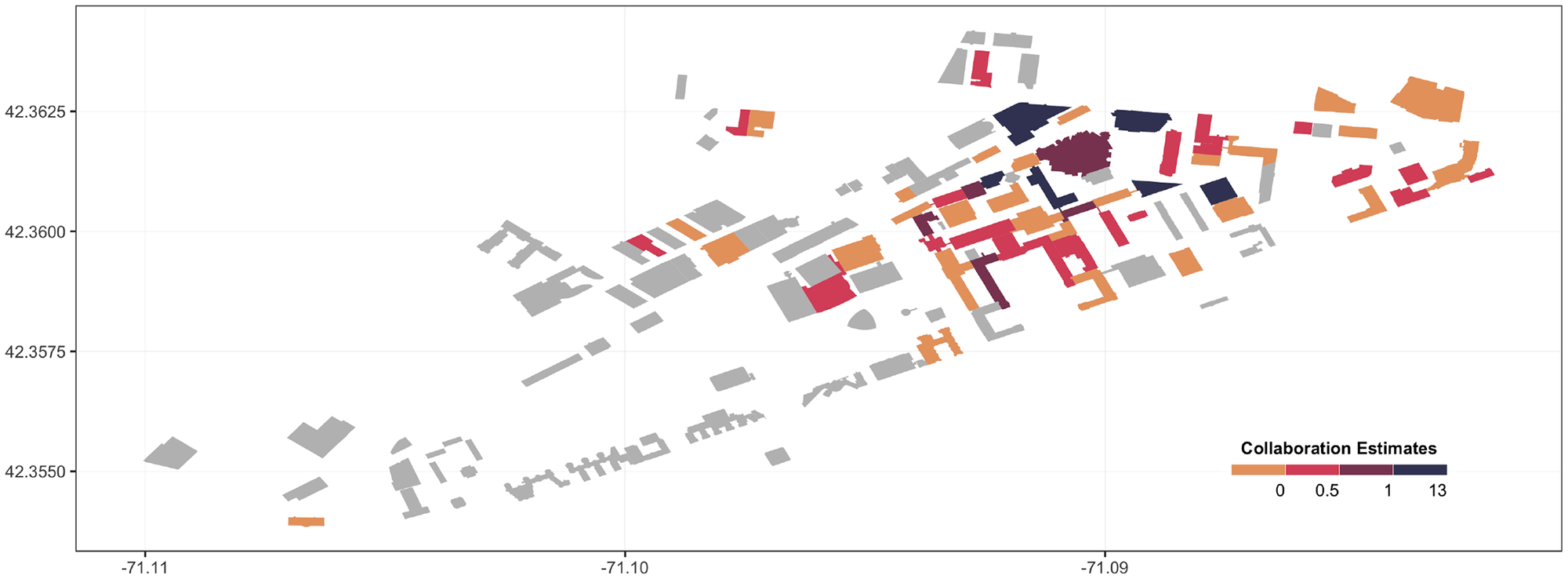
My research follows three distinct but related themes. The first explores something architects, workplace HR specialists, and campus planners assume to be true: that physical proximity increases collaboration. My masters research was a quantitative approach. I created a large dataset of MIT papers and patents, and used network analysis to show that proximity does increase collaboration, especially for patents. A follow-up study confirmed the findings using a natural experiment to isolate the direction of causality.
The second theme is entrepreneurship in the built environment. By 2015 a new category of “urban technologies” had forcefully entered cities – and the zeitgeist. Uber, WeWork, and Airbnb were showing that networked systems could unlock value from cities. But to me it seemed that the conventional plays in Silicon Valley’s playbook were ill-suited to engaging cities in a productive and mutually beneficial way. In 2016 I co-founded MITdesignX with Professors Dennis Frenchman and Andrea Chegut to address that issue head-on. Svafa Grönfeldt and Gilad Rosenzweig soon joined us, and together we developed a new approach to entrepreneurship for design and the built environment. I helped build the program and taught in its Venture Design course throughout my PhD. Ten years on, MITdesignX has worked with hundreds of students and faculty to launch companies, and in 2026 it was named to TIME’s list of best accelerators.
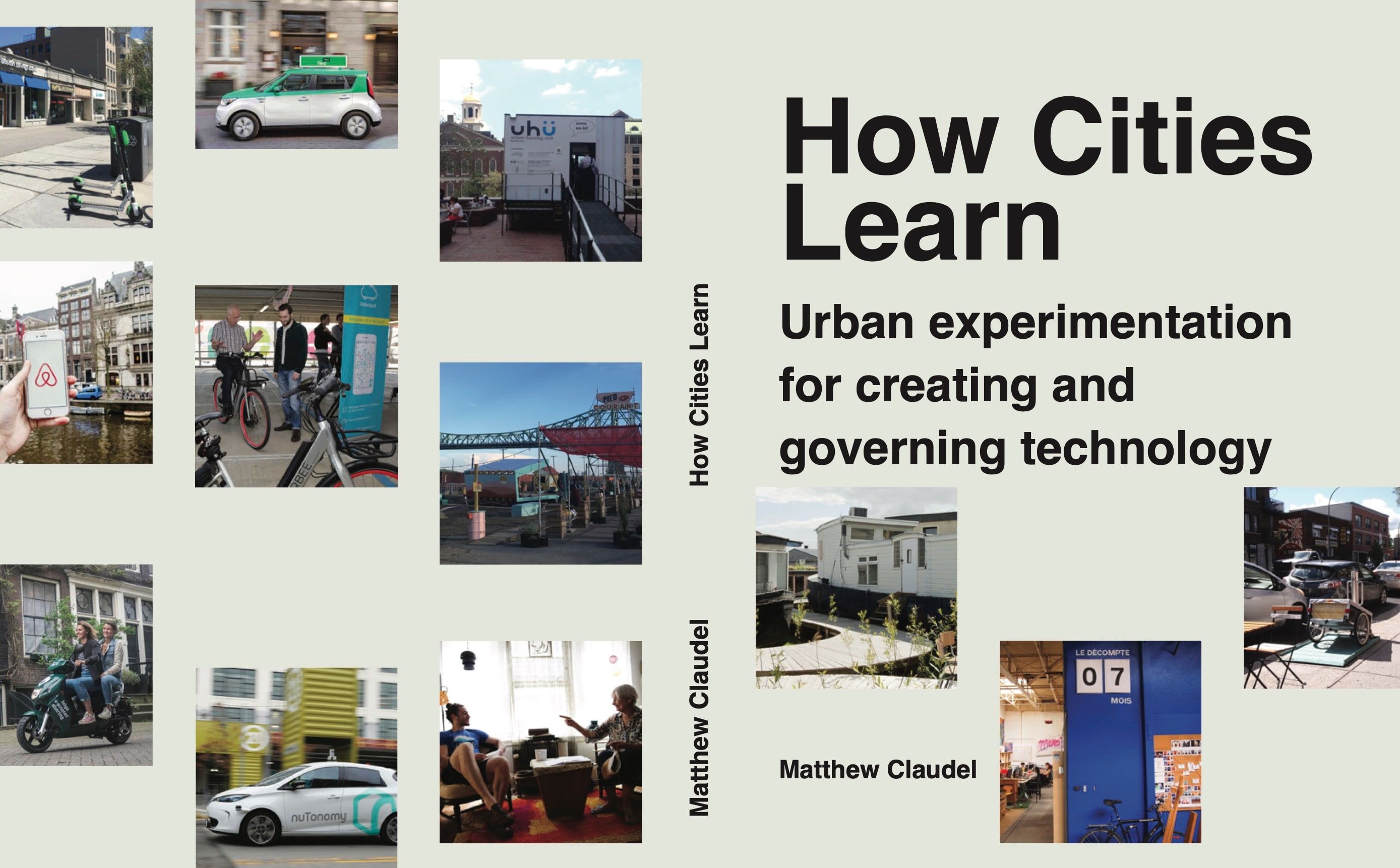
As I taught and advised MITdesignX ventures – and as I studied the MITdesignX method – I noticed a recurring crux: the problem of piloting the first prototype in cities. Entrepreneurs could build truly astonishing technologies that would fail at the first hint of rain, or turn out to be irrelevant upon meeting their first users. City governments that stood to gain so much had no effective mechanism to structure pilot projects, learn from them, shape the technologies, and ultimately permit or procure them. My PhD dissertation, How Cities Learn: Urban Experimentation for Creating and Governing Technology presents the first structured typology of urban experimentation. 12 case studies across two urban domains and three international cities showed conclusively that urban experiments can – and often do – create civic value, but that conventional organizational structures (private company, government program) are poor tools for stewarding that value. The cognitive metaphor is helpful here: a city can “think” about a new technology through experimentation, but it cannot truly “learn” without adequate institutional protocols and without organizational forms that are best-fit to running urban technologies in public space and in the public interest.
The third theme is a response to the fundamental question I found at the core of the second. Adaptive Urbanism is an approach to designing buildings, institutions, and capital for continuous learning rather than performance against a prediction. This is an active area of research – I have written a book manuscript with Simon Giles, and at Field States we are creating tools for applied work with clients. The Conversion Friction Coefficient, for example, is a structured measure of the difficulty of converting a building from one use to another, incorporating structure, MEP, envelope, zoning, and more. The Adaptive Valuation Tool is another – it pairs discounted cash flow with real-options analysis to put a dollar value on buildings’ flexibility across a full real estate portfolio. Owners can quickly understand whether to sell, hold, upgrade or convert. The Urban Autonomy Lab is a third: it centers on the urban impact of autonomous vehicle fleet deployment, and brings together regulators, technologists, and governments across levels to develop protocols through structured pilots.