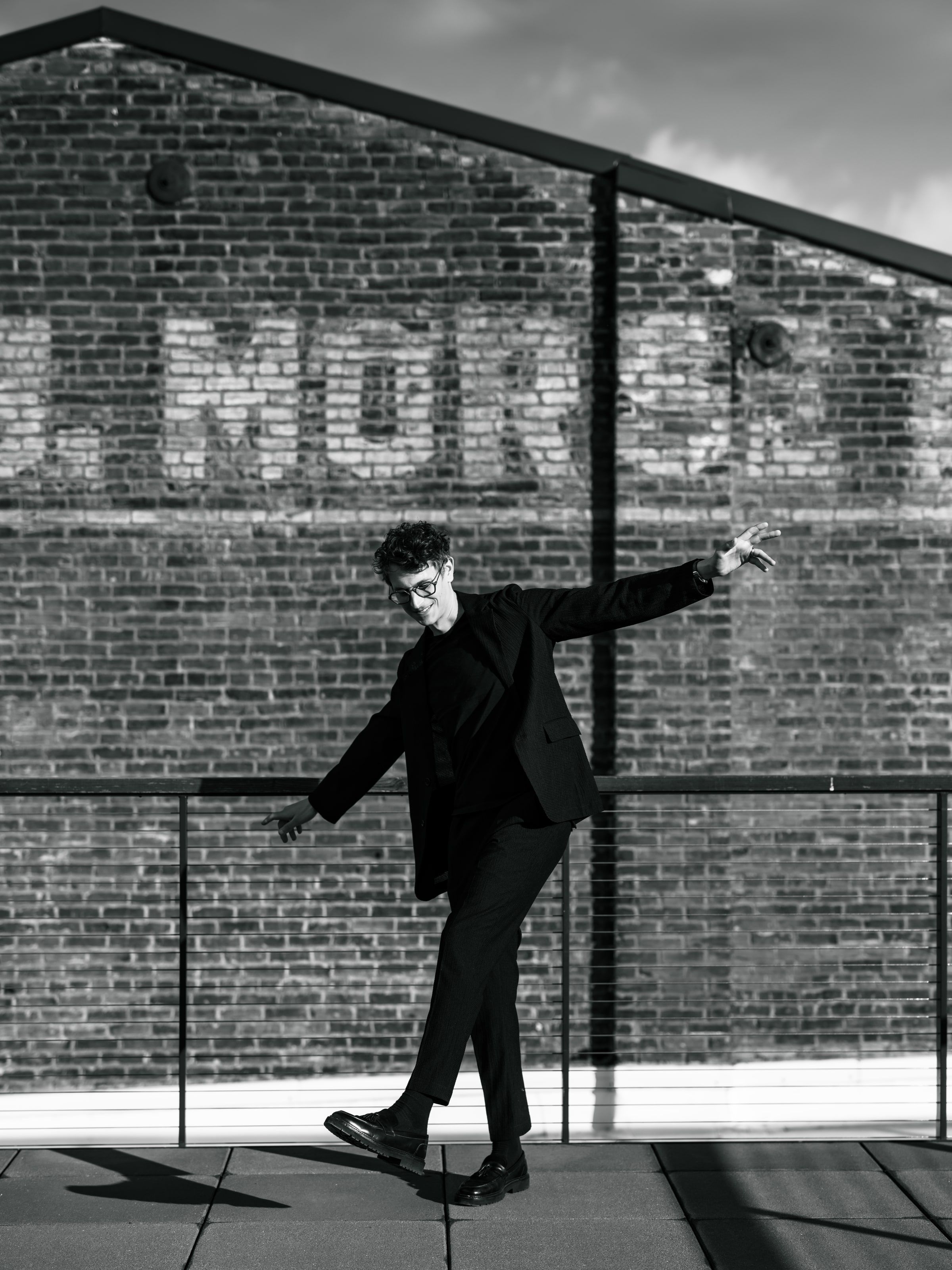
About
Cities have always adapted – like biological organisms, they evolve. They change with the weather, with the economy, and with new technologies: the end-user software, architectural systems, mobility devices, and tools we use to build, sense, and make sense of cities. They are social things, cities, and they change with culture.
If dynamism is what draws me to them, what motivates me to work on cities is the belief that they can learn. Biological evolution never moves toward an imagined ideal; it only ever moves away from known harms. For the most part this is how cities change, too: they fumble and grope their way into the future by solving problems. But unlike species, cities can, in the best cases, structure experiments and learn from them. Each trial moves the city toward something better, with intention and clarity. This is the scientific method applied to cities, with a humanist flair and a healthy dose of entrepreneurialism.
Inspiration
As cities across the world open up, urban planners and architects — and the rest of us — are looking around, asking whether our streets and buildings will be, or should be, the same again. But whatever we decide, there’s one transformational tool for building the cities that’s right in front of us, calling for more sustained attention: the design of time. We can creatively reorganize our collective hours and days in ways that help more people enjoy our cities and institutions. Time might be our most valuable resource for building the environments we want.
The formation of states must be an experimental process. The trial process may go on with diverse degrees of blindness and accident, and at the cost of unregulated procedures of cut and try, of fumbling and groping, without insight into what men are after or clear knowledge of a good state even when it is achieved. Or it may proceed more intelligently, because guided by knowledge of the conditions which must be fulfilled. But it is still experimental. And since conditions of action and of inquiry and knowledge are always changing, the experiment must always be retried; the State must always be rediscovered.
Continuing to presume that complex policy problems are simple problems that can be solved through the adoption of simple designs that are given general names, such as private property, government ownership, or community organization, is a dangerous academic approach. Dichotomizing the institutional world into ‘the market’ as contrasted to ‘the state’ is so grossly inadequate and barren that it is surprising how the dichotomy survives as a basic way of organizing academic studies and policy advice. Oversimplification of our design options is dangerous since it hides more of the working parts needed to design effective, sustainable institutions than it reveals. And, it reduces our awareness of the need to monitor outcomes and improve them over time through better processes of learning and adaptation.
Yet a man who uses an imaginary map, thinking that it is a true one, is likely to be worse off than someone with no map at all; for he will fail to inquire whenever he can, to observe every detail on his way, and to search continuously with all his senses and all his intelligence for indications of where he should go.
The truth of the matter is that our deficiency does not lie in the want of well-verified ‘facts.’ What we lack is our bearings. The contemporary experience of things technological has repeatedly confounded our vision, our expectations, and our capacity to make intelligent judgements. Categories, arguments, conclusions and choices that would have been entirely obvious in earlier times are obvious no longer. Patterns of perceptive thinking that were entirely reliable in the past now lead us systematically astray. Many of our standard conceptions of technology reveal a disorientation that borders on dissociation from reality. And as long as we lack the ability to make our situation intelligible, all of the ‘data’ in the world will make no difference.
This is the heart of the matter, the one totally hidden behind the smokescreens of the obsolete debate between State vs. Market. Accounts help in representing state of affairs at time t, not in deciding what to do at time t+1, nor in predicting what will happen. No calculative device is a substitute for political decisions (if decisions is a good word).
We often metaphorically say that States have ‘Heads,’ but we rarely inquire what sort of cognitive equipment they should be endowed with, not to mention the neurophysiology of those artificial brains… the question of the sort of thinking the State is supposed to possess.
There is nothing more complex, nothing more susceptible of mistakes, nothing in greater need of specific and constantly refreshed inquiries than to detect what, at any point, is the public’s problem… Whatever has been planned, there are always unwanted consequences for a reason that has nothing to do with the quality of the research or with the precision of the plan, but with the very nature of action. It is never the case that you first know and then act, you first act tentatively and then begin to know a bit more before attempting again. It is this groping in the dark that is so difficult to map, especially when it is done by millions of people over the life of millions of others.
Persevering in one’s existence is the particular quality of the organism; it is not a progress towards achievement, followed by stasis, which is the machine’s mode, but an interactive, rhythmic, and unstable process, which constitutes an end in itself.
Perhaps the utopist should heed this unsettling news at last. Perhaps the utopist would do well to lose the plan, throw away the map… I don’t think we’re ever going to get to utopia again by going forward, but only roundabout or sideways; because we’re in a rational dilemma, an either/or situation as perceived by the binary computer mentality, and neither the either nor the or is a place where people can live.
Penser la pensée revient le plus souvent à se retirer dans un lieu sans dimension où l’idée seule de la pensée s’obstine. Mais la pensée s’espace réellement au monde. Elle informe l’imaginaire des peuples, leurs poétiques diversifiées qu’à son tour elle transforme, c’est-à-dire, dans lesquels se réalise son risque.Thinking thought usually amounts to withdrawing into a dimensionless place in which the idea of thought alone persists. But thought in reality spaces itself out into the world. It informs the imaginary of peoples, their varied poetics, which it then transforms, meaning, in them its risk becomes realized.
La culture est la précaution de ceux qui prétendent à penser la pensée mais se tiennent a l’écart de son chaotique parcours. Les cultures en évolution infèrent la Relation, le dépassement qui fonde leur unité-diversité. La pensée dessine l’imaginaire du passé : un savoir en devenir. On ne saurait l’arrêter pour l’estimer, ni l’isoler pour l’émettre. Elle est partage dont nul ne peut se départir ni, s’arrêtant, se prévaloir.Culture is the precaution of those who claim to think thought but who steer clear of its chaotic journey. Evolving cultures infer Relation, the overstepping that grounds their unity-diversity. Thought draws the imaginary of the past: a knowledge becoming. One cannot stop it to assess it nor isolate it to transmit it. It is sharing one can never not retain, nor ever, in standing still, boast about.
His eyes are staring, his mouth is open, his wings are spread … His face is turned to the past. Where we perceive a chain of events, he sees one single catastrophe which keeps piling wreckage upon wreckage and hurls it in front of his feet … [A] storm … blowing from Paradise … irresistibly propels him into the future to which his back is turned, while the pile of debris before him grows skyward. This storm is what we call progress.
There are always other ways of doing technology; other ways of thinking it and other ways of putting it to use. The only constraint is our imagination, and our intent. What other worlds might we discover if more of our technologies were consciously, thoughtfully employed – pointed, not at one another, but at the more-than-human world?
… a journey is called that because you cannot know what you will discover on the journey, what you will do with what you find, or what you find will do to you.
Consumerism isn’t that we love things. It’s that we don’t love things. We love novelty.
I’ve been thinking about our storylines And how your past becomes your present if it’s always on your mind
…I realized that not everything is decaying faster than we can love it.
Fiction is the best way of understanding beings other than oneself.
Home? It’s the place you can never visit for the first time, because by the time it’s become home, you’ve already been there. You can only return. (You can never go home, only go home again.)
Even the most impassioned insistence on our interdependence or entanglement offers only a description of our situation; it does not indicate how we are to live it. The question is not whether we are enmeshed, but how we negotiate, suffer, and dance with that enmeshment.
What goes for the city goes for the termite mound: habitat and inhabitants are in continuity; to define the one is to define the others; the city is the exoskeleton of its inhabitants, just as the inhabitants leave behind a habitat in their wake… The inanimate framework and those that animate it – it’s all one. A completely naked urbanite doesn’t exist any more than a termite outside of its termite mound… A termite mound without a termite is a heap of mud, like the ritzy quartiers, during the lockdown, when we’d idly amble past all these sumptuous buildings without any inhabitants to enliven them.
In terms of urbanism, this indeterminacy [of the program from one floor to the next] means that a particular site can no longer be matched with any single predetermined purpose. From now on each metropolitan lot accommodates—in theory at least—an unforeseeable and unstable combination of simultaneous activities, which makes architecture less an act of foresight than before and planning an act of only limited prediction. It has become impossible to ‘plot’ culture. Each ‘plan’ is an abstract composition of activities that describes, on each of the synthetic platforms, a different ‘performance’ that is only a fragment of the larger spectacle of the Metropolis.
We have no idea what history may still bring forth. It is not the business of political philosophy and science to determine what the state in general should or must be. What they may do is to aid in creation of methods such that experimentation may go on less blindly, less at the mercy of accident, more intelligently, so that men may learn from their errors and profit by their successes. The belief in political fixity, of the sanctity of some form of state consecrated by the efforts of our fathers and hallowed by tradition, is one of the stumbling-blocks in the way of orderly and directed change; it is an invitation to revolt and revolution.
Short biography
Matthew Claudel is the founder and CEO of Field States, an urban design and real estate strategy firm based in Portland, Oregon. He has a PhD in Advanced Urbanism from MIT, and is the co-author of two books: Open Source Architecture and The City of Tomorrow. In 2016 he co-founded MITdesignX, where he created and taught a new approach to design entrepreneurship. During the COVID-19 pandemic he was Strategic Design Lead at Curative, where he led a vaccination program that delivered 2.5 million doses in more than 30 states. He serves on the board of Caldera, an arts nonprofit that expands access to creativity for underserved youth in Oregon.
Long biography
Matthew Claudel is the founder of Field States, an urban design and real estate strategy firm that identifies and creates new value in real places under conditions of uncertainty. He has a PhD in Advanced Urbanism from MIT, where his work focused on the emerging practices of urban experimentation as they relate to civic value.
Matthew has co-authored two books, Open Source Architecture (Thames & Hudson) and The City of Tomorrow (Yale University Press), and has published articles in peer-reviewed journals, book chapters and speculative fiction, focused on technology, design, and cities.
In 2016, Matthew co-founded MITdesignX, which supports entrepreneurship for design and the built environment. At MITdesignX he was the Head of Civic Innovation and an instructor for four years. Through the Rappaport Public Policy Fellowship, Matthew spent summer 2018 at Boston's Mayor's Office of New Urban Mechanics, where he worked on Beta Blocks, an initiative to test technology in the public right-of-way to judge its potential for serving the public good. In 2018 Matthew served on the jury for Canada's Smart Cities Challenge, whose top prize was $50 million, and continued to support the program as a strategic advisor for the Community Solutions Network, through Open North.
From 2020-21, Matthew was the Strategic Design lead for the health care company Curative. In that role, he led the vaccination program, which began with a concept, strategy, and pilot project, then grew to deliver 2.5 million doses in over 30 states — and he also founded and chaired the company’s Health Equity Committee. In 2021-2022, he held a Purpose Future Fellowship at the Purpose Foundation, where he created Good Energy, a new ownership and financing model for more equitable access to neighborhood-scale renewable energy micro-grids.
Matthew was a Visiting Assistant Professor at the University of Michigan’s A. Alfred Taubman College of Architecture and Urban Planning in 2023, and an Affiliate Faculty Member at Portland State University’s Department of Geography. As an undergraduate, he studied architecture at Yale, and received a Master of Science in Urban Studies & Planning from MIT. He serves on the board of Caldera, an arts nonprofit that expands access to creativity for underserved youth in Oregon.
CV
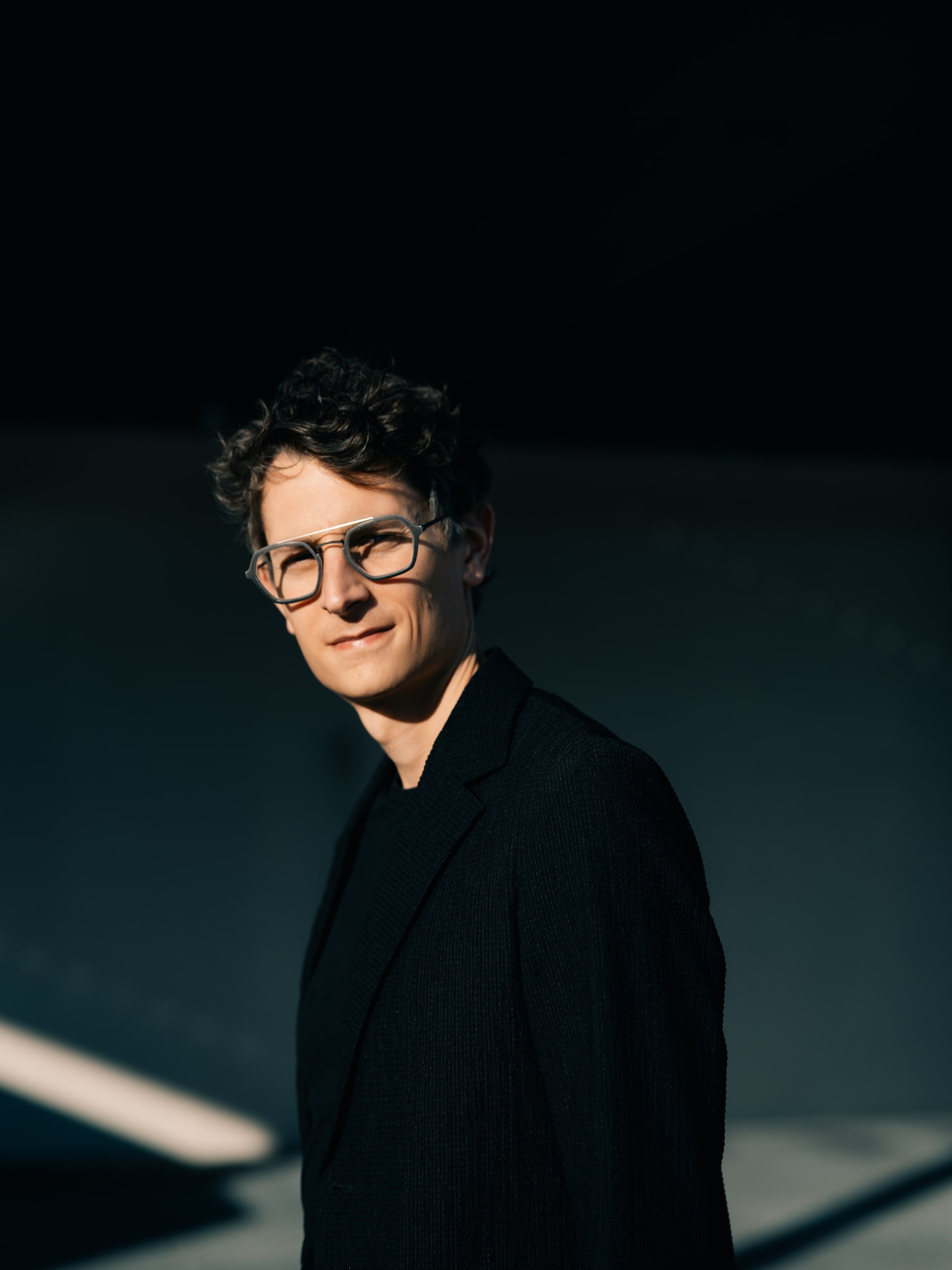
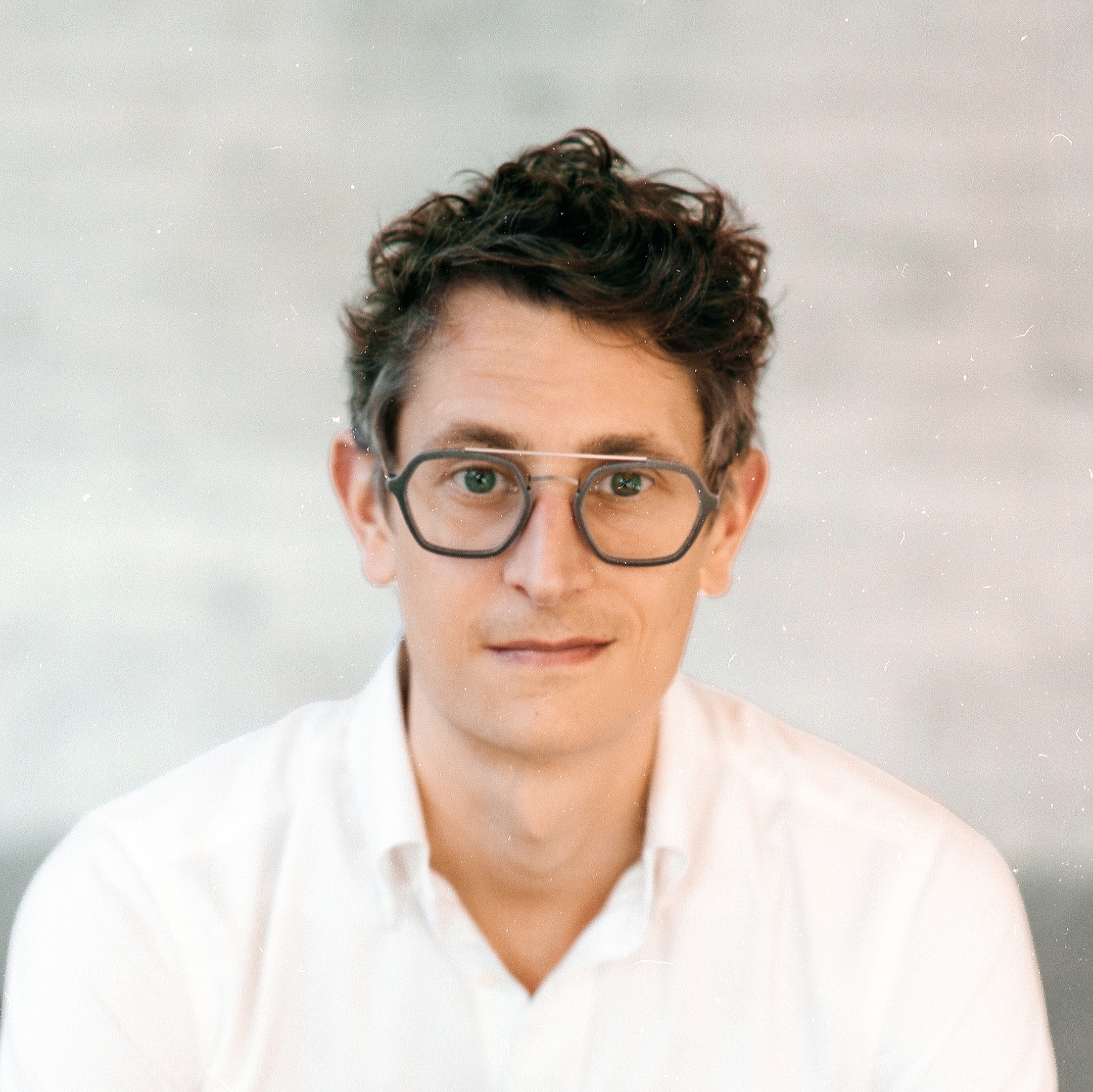
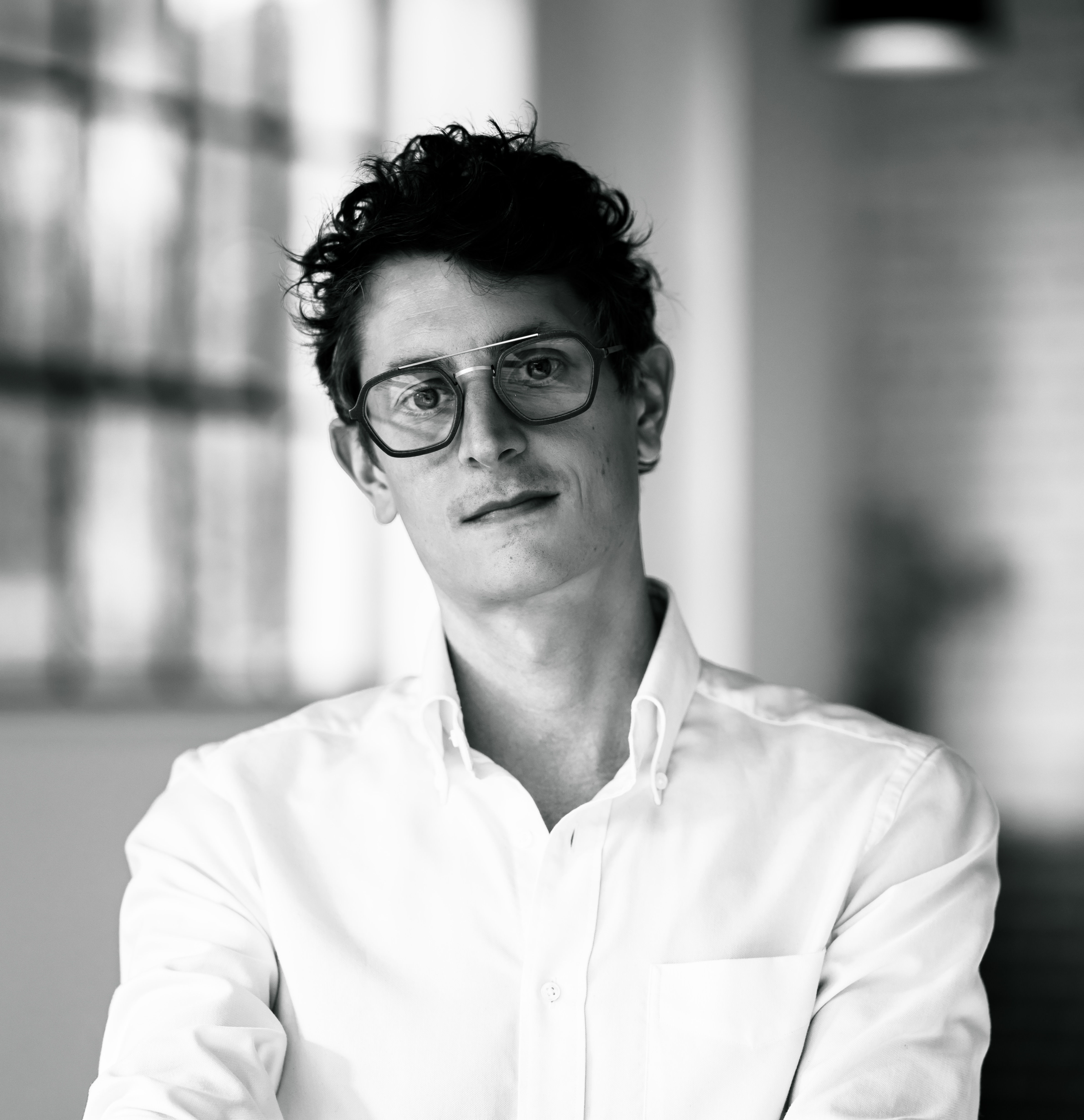
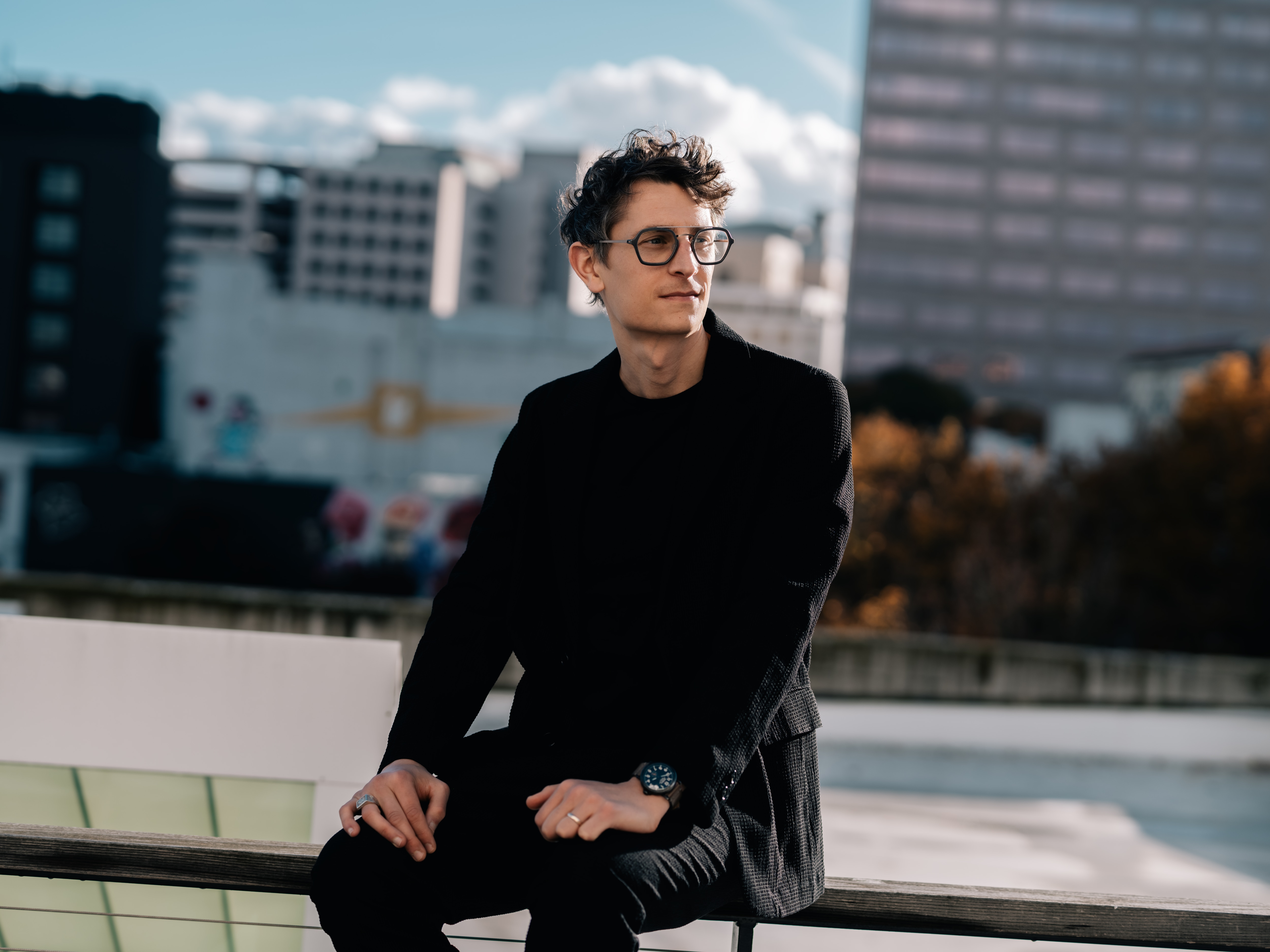
Headshots
Contact
For speaking, writing, and press, please reach out to me directly. For project work, start with Field States.
Thank you. I’ll write back soon.